

Transcranial Magnetic Stimulation (TMS) has gained attention as a promising option for adults facing treatment-resistant depression. But does it really work? This question matters deeply to those who have tried multiple medications and therapies without success. Our practice tracks patient progress closely, using standardized measures like PHQ-9 and GAD-7 scores to monitor and evaluate outcomes. The data shows a clear pattern: patients receiving TMS experience significant improvement, often reaching remission in both their depression and anxiety by the end of their treatment.
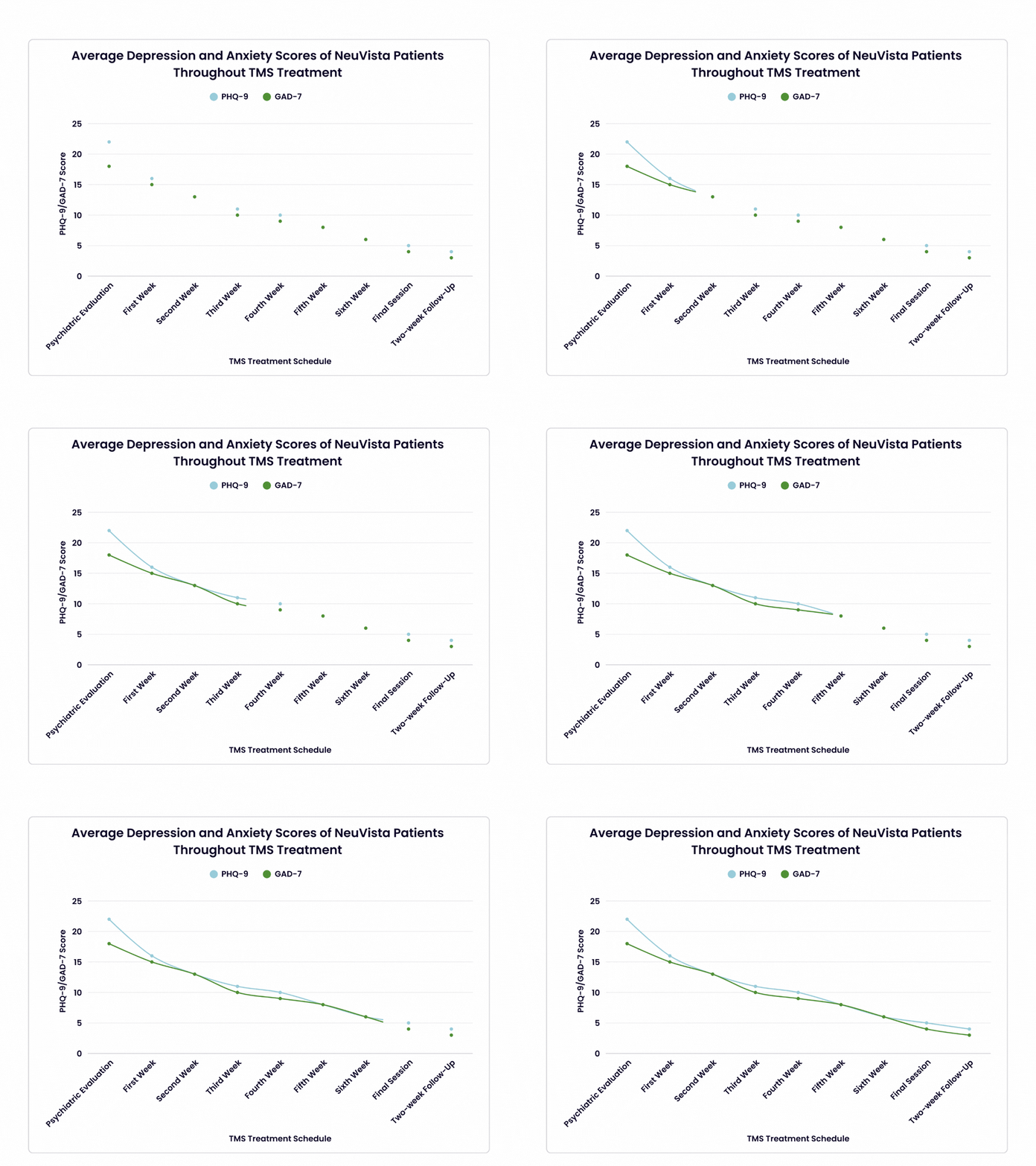
Figure 1. Mean weekly PHQ-9 and GAD-7 scores for all patients who completed TMS treatment at our clinic. Values represent aggregated patient-reported outcomes across the treatment course.
Understanding TMS Therapy and Its Role in Depression Treatment
TMS is a non-invasive procedure that uses magnetic fields to stimulate nerve cells in the brain. It targets areas involved in mood regulation, aiming to improve symptoms of depression. Unlike medications, TMS does not involve systemic side effects, making it an attractive option for many patients.
Depression treatment often requires a personalized approach. For those who do not respond to antidepressants or psychotherapy, TMS offers a new avenue. Our practice focuses on adults with treatment-resistant depression, providing TMS as part of a comprehensive care plan.
Measuring Progress with PHQ-9 and GAD-7 Scores
To assess the effectiveness of TMS, we use two widely accepted tools:
PHQ-9 (Patient Health Questionnaire-9): Measures the severity of depression symptoms over the previous two weeks. Scores range from 0 - 27:
0 - 4: Minimal or no depression
5 - 9: Mild depression
10 - 14: Moderate depression
15 - 19: Moderately severe depression
20 - 27: Severe depression
GAD-7 (Generalized Anxiety Disorder-7): Assesses anxiety levels, which often co-occur with depression over the previous two weeks. Scores range from 0 - 21:
0 - 4: Minimal anxiety
5 - 9: Mild anxiety
10 - 14: Moderate anxiety
15 - 21: Severe anxiety
Patients complete these brief questionnaires before starting treatment, weekly throughout their TMS course, and after completing treatment. Tracking these scores over time provides an objective way to monitor symptom improvement and treatment response.
A decrease in these scores throughout treatment indicates that symptoms are improving. In research, a reduction of about 5 points on the PHQ-9 or 4 points on the GAD-7 is considered a meaningful clinical improvement. Many studies also define a successful treatment response as a 50% reduction in symptoms, while remission means symptoms have improved to the point that they are minimal (a score below 5 on either questionnaire).
What Our Data Shows
Our temporal graph tracks PHQ-9 and GAD-7 scores for patients throughout their TMS treatment course. The results are encouraging:
Consistent decline in scores: All of our patients show a steady decrease in both depression and anxiety symptoms.
Remission by end of treatment: Nearly all patients reach remission levels, defined as minimal or no symptoms, by the final sessions.
Sustained improvement: Follow-up assessments indicate that many maintain these gains weeks and months after treatment ends.
This pattern supports the understanding that TMS can effectively reduce symptoms in individuals who have struggled with other depression treatments.
Real-World Examples from Our Practice
Consider a patient who began treatment with a PHQ-9 score of 24, indicating severe depression. After three weeks of TMS, their score dropped to 10, and by the end of treatment, it was a 4; well within remission range. Their GAD-7 score followed a similar trajectory, dropping from 19 to 3.
Examples like this reflect the broader trend seen in our data and highlight the potential of TMS as an efficacious treatment for depression.
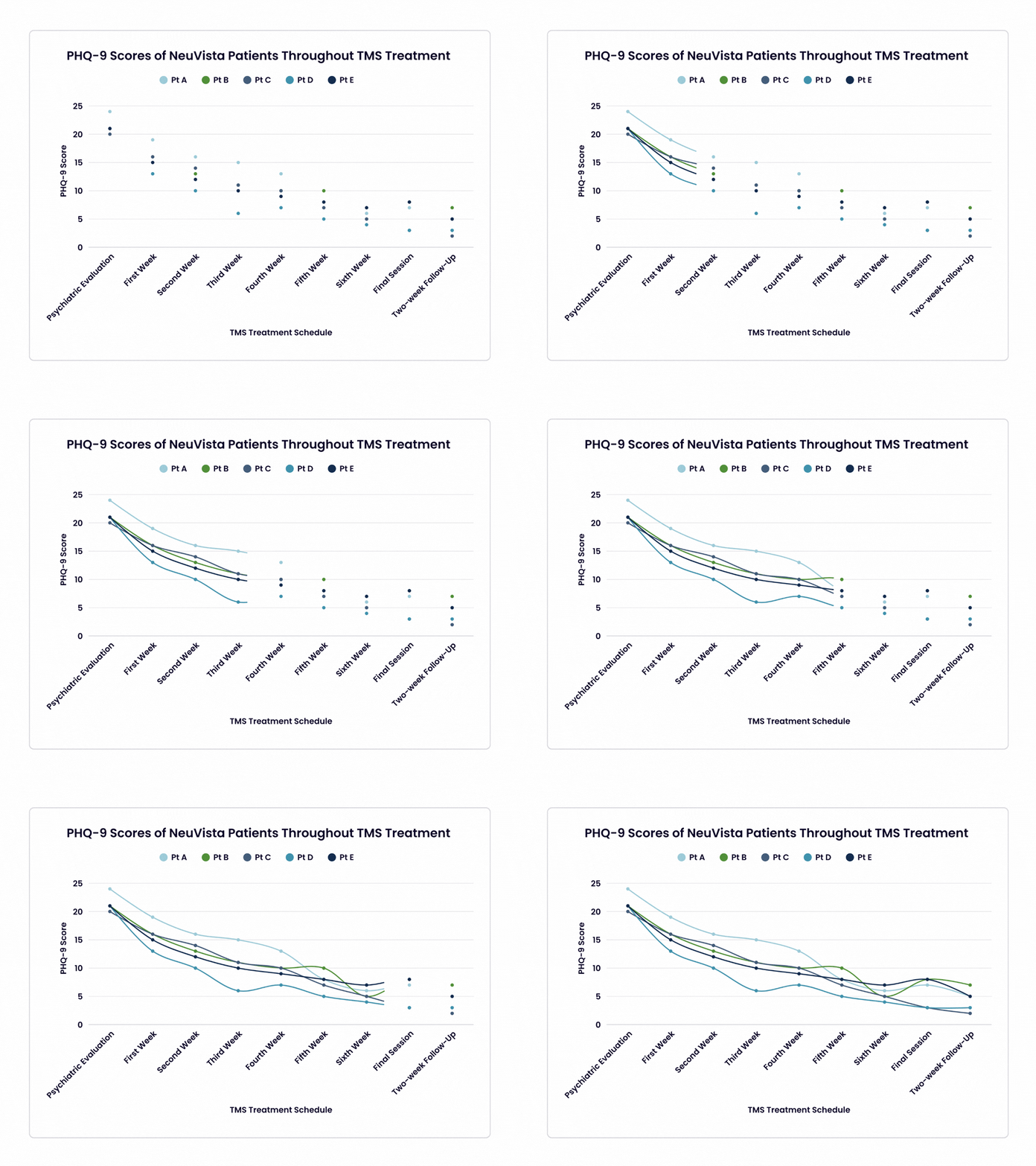
Figure 2. PHQ-9 scores recorded throughout the course of TMS treatment for the five most recently completed treatment courses at our clinic. These cases are presented as the most recent consecutive completions and are not intended to represent our full clinical dataset.
What This Means for Patients and Providers
For adults facing treatment-resistant depression, these findings offer hope. TMS provides a treatment option that can lead to meaningful symptom relief and remission.
Patients should discuss TMS with a healthcare providers to understand if it fits their specific needs. Get connected with one of our providers today to see if TMS may be right for you.
Important Considerations
- Individual response varies: While not all patients respond identically, every patient in our practice has demonstrated significant improvement.
- Treatment commitment: TMS requires multiple sessions over several weeks, so commitment is key. Studies show that approximately 75 - 90% of patients complete a full course of TMS treatment. At NeuVista Mental Health, our completion rate is currently 100%, reflecting our commitment to patient education, support, and individualized care throughout the treatment process.
- Complementary care: Combining TMS with therapy or medication may enhance outcomes. NeuVista offers comprehensive care so you are able to receive psychiatry, therapy and TMS all under one roof.
Summary
Our practice’s data confirms that TMS works for many adults with treatment-resistant depression. The steady decline in PHQ-9 and GAD-7 scores during treatment and remission at the end demonstrate its effectiveness. For those struggling with depression, TMS offers a promising path toward recovery.
If you or a loved one are exploring options beyond traditional depression treatment, consider scheduling a free consultation to discuss TMS with one of our healthcare providers. The evidence from our practice supports its role as a valuable treatment option that can help restore quality of life.
Disclaimer: This blog post is for informational purposes only and does not replace professional medical advice. Patients should consult their healthcare providers before starting any new treatment.
- Sackeim HA, et al. (2020). Clinical TMS Society Consensus Review and Treatment Recommendations for TMS Therapy for Major Depressive Disorder. This review discusses adherence and practical considerations for TMS treatment.
- Kroenke K, Spitzer RL, Williams JBW. The PHQ-9: Validity of a Brief Depression Severity Measure. Journal of General Internal Medicine. 2001;16(9):606-613. https://doi.org/10.1046/j.1525-1497.2001.016009606.x
- Spitzer RL, Kroenke K, Williams JBW, Löwe B. A Brief Measure for Assessing Generalized Anxiety Disorder: The GAD-7. Archives of Internal Medicine. 2006;166(10):1092-1097. https://doi.org/10.1001/archinte.166.10.1092
- Löwe B, Unützer J, Callahan CM, Perkins AJ, Kroenke K. Monitoring Depression Treatment Outcomes With the Patient Health Questionnaire-9. Medical Care. 2004;42(12):1194-1201.
- Toussaint A, Hüsing P, Gumz A, et al. Sensitivity to Change and Minimal Clinically Important Difference of the GAD-7. Journal of Affective Disorders. 2020;265:395-401.